
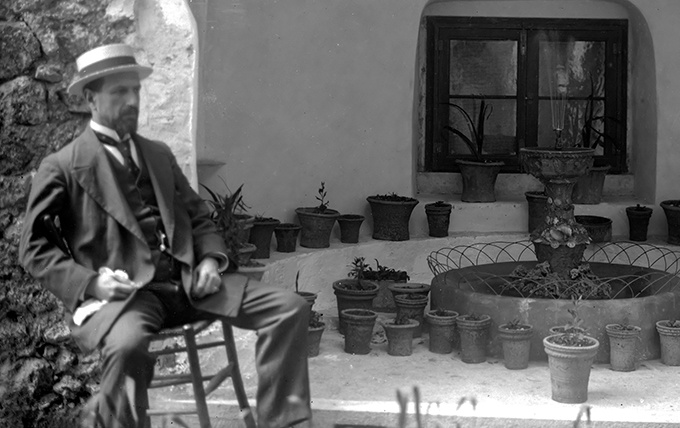
Giovanni Tancredi, born in Monte Sant’Angelo on September 2, 1872, and died in the same city on November 2, 1948, was a scholar of the history and folk culture of the Gargano region, an educator, and a promoter of cultural initiatives that helped document and preserve the memory of his community. His work unfolded during a period—from the late nineteenth century through the early decades of the twentieth century—when interest in folk traditions, material culture, and the study of local communities was growing in Italy. Tancredi contributed to this cultural climate through research deeply rooted in the local area, dedicating himself to collecting testimonies, objects, images, customs, stories, and documents relating primarily to Monte Sant’Angelo and the Gargano region.
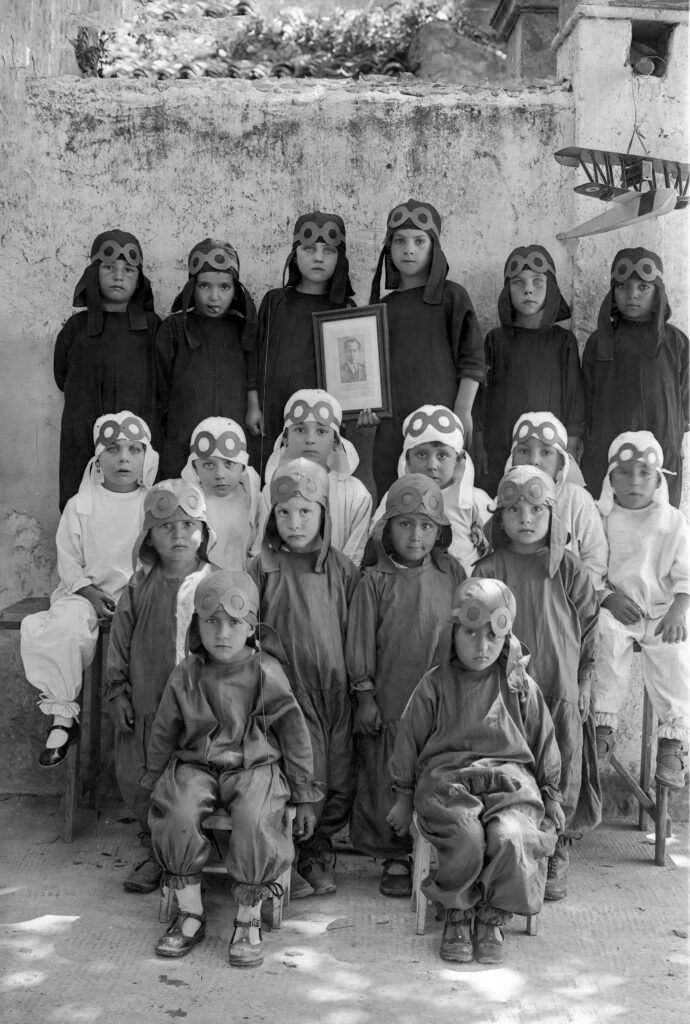
Education and Educational Commitment His intellectual work was closely linked to his educational activities. After completing his education in Naples, Tancredi devoted himself to teaching and promoting education, paying particular attention to the social conditions of the working classes and the problem of illiteracy. In 1920, he spearheaded the founding of the “Casa dei Bambini,” an educational initiative inspired by the principles of the Montessori method and focused on early childhood education. This pedagogical experience reinforced his interest in the daily life of the community and in the cultural heritage passed down through the generations.
The Collection of Folk Traditions Beginning in the late 19th century, Tancredi devoted himself to collecting songs, stories, legends, proverbs, customs, and accounts of life in the Gargano region. His research also encompassed the material aspects of culture: clothing, work tools, household objects, craft practices, and agricultural and pastoral activities. In this way, tradition was not viewed merely as a collection of stories or customs, but as a complex system in which language, work, religion, family life, and social organization were closely intertwined.
Photography as a Documentary Tool One of the most significant aspects of his work is the systematic use of photography. The Tancredi Photo Archive preserves approximately 700 glass negatives and additional images on film, taken primarily between 1893 and 1932. The photographs document people, customs, work activities, festivals, landscapes, architecture, and scenes from daily life in the Gargano region. Not all of the images were necessarily taken by Tancredi himself: the collection also includes photographs taken by other photographers on his commission or following a documentary approach he directed. Today, this body of work constitutes a source of extraordinary interest for the social and ethnographic history of the region.
The Museum of Folk Arts and Traditions In 1925, Tancredi founded the Gargano Museum of Folk Arts and Traditions, collecting objects and materials intended to document the community’s material culture. The museum was also established with an educational purpose and was linked to the “Casa dei Bambini” (Children’s House), through which Tancredi sought to bring young people into contact with the environment, crafts, and traditions of their homeland. The collections included agricultural and artisanal tools, handicrafts, traditional costumes, household items, and artifacts related to religion and work.
The National Scope of His Work Tancredi’s interests were not limited to Monte Sant’Angelo. His work became part of the main Italian circles dedicated to ethnography and folk traditions. He participated in events and exhibitions where he showcased the customs and material culture of the Gargano region, helping to raise awareness of the local heritage beyond the borders of Puglia. In 1929, he presented a significant photographic collection at the Foggia Photography Exhibition, and in 1930, he participated in the First National After-Work Arts and Crafts Exhibition in Bolzano. His museum collection was also presented as a cohesive body of work at the Second International Exhibition of Decorative Arts in Monza.
Folklore of the Gargano His most extensive work is *Folklore of the Gargano*, published in the late 1930s and generally dated 1938. The volume collects and organizes a vast array of materials related to the folk culture of the Gargano and remains to this day one of the primary documentary accounts of traditional society in Monte Sant’Angelo. In it, Tancredi addresses numerous aspects of community life: religious and secular festivals, beliefs, ritual practices, songs, family customs, engagement and marriage, death and funeral rites, work activities, crafts, diet, clothing, and other manifestations of folk culture.
Research Based on Firsthand Knowledge: The value of Tancredi’s work also stems from the close relationship between writing and the observation of reality. His studies are not limited to the collection of bibliographic information but make extensive use of local accounts, direct observation, photographic documentation, and the collection of artifacts. This combination of tools enabled him to document aspects of life in the Gargano region that were destined to change rapidly under the pressure of modernization, urbanization, and the economic and social changes of the first half of the 20th century.
Local History, Archaeology, and Architectural Heritage Tancredi’s interests were not limited to folklore. Throughout his career, he also studied the history and monuments of Monte Sant’Angelo, serving as honorary inspector of Monuments and Antiquities of the Gargano. This aspect of his research includes works dedicated to the history of the city, the sanctuary, and its architectural heritage, such as *Monumental Monte Sant’Angelo* and *Apollo and the Archangel Saint Michael*. His personal library, in fact, contains materials on history, archaeology, art, religion, and local culture that reflect the breadth of his interests.
Popular Culture Between Tradition and Transformation: Tancredi was active during a period of rapid transformation in Gargano society. Modernization was gradually altering the organization of work, living arrangements, customs, and rituals, while emigration and changing economic conditions were disrupting the transmission of traditional practices and knowledge. His work as a collector also reflected this awareness of change: documenting meant preserving a memory that was in danger of being lost and providing future generations with materials useful for understanding the society of his time.
Tancredi’s Legacy Today The materials collected by Tancredi are now housed among the “Giovanni Tancredi” Ethnographic Museum, the Photo Archive, and the bibliographic collection held at the “Ciro Angelillis” Municipal Library. Taken together, these materials allow us to reconstruct not only the traditions of the Gargano region but also the way in which, between the 19th and 20th centuries, a community represented itself through objects, images, words, and practices. The preservation of this heritage thus makes it possible to complement the monumental history of Monte Sant’Angelo with the history of daily life and popular culture.
Giovanni Tancredi and the History of the Gargano: Tancredi’s legacy consists not only of his publications. It is made up of a collection of photographs, objects, notes, books, and testimonies through which he succeeded in compiling a comprehensive and detailed record of Gargano society. Today, his work represents a particularly important source for the study of material culture, folk traditions, and the social history of Monte Sant’Angelo and the Gargano, and constitutes one of the main documentary collections through which it is possible to observe the transformation of the local community throughout the 20th century.