
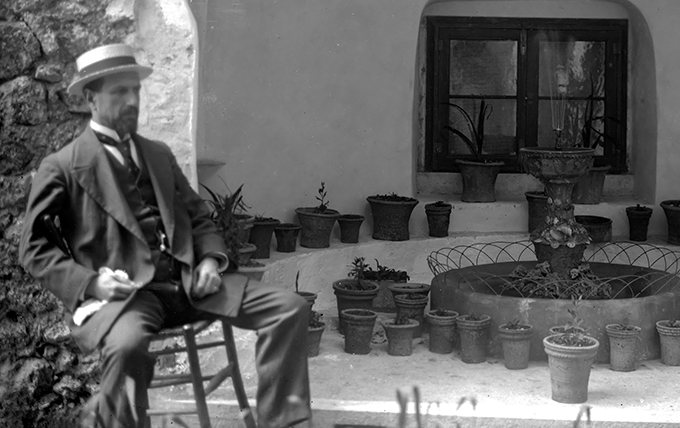
The “Giovanni Tancredi” Museum of Arts and Popular Traditions of the Gargano in Monte Sant’Angelo constitutes one of the most prestigious ethno-anthropological institutions in Apulia, serving as a fundamental crossroads for documenting the material culture and social practices of the Gargano communities. Its origin is inextricably linked to the work of Giovanni Tancredi (1872–1948), an educator and researcher who, between the late 19th and the first half of the 20th century, dedicated himself with scientific rigor to the collection and study of local folklore.
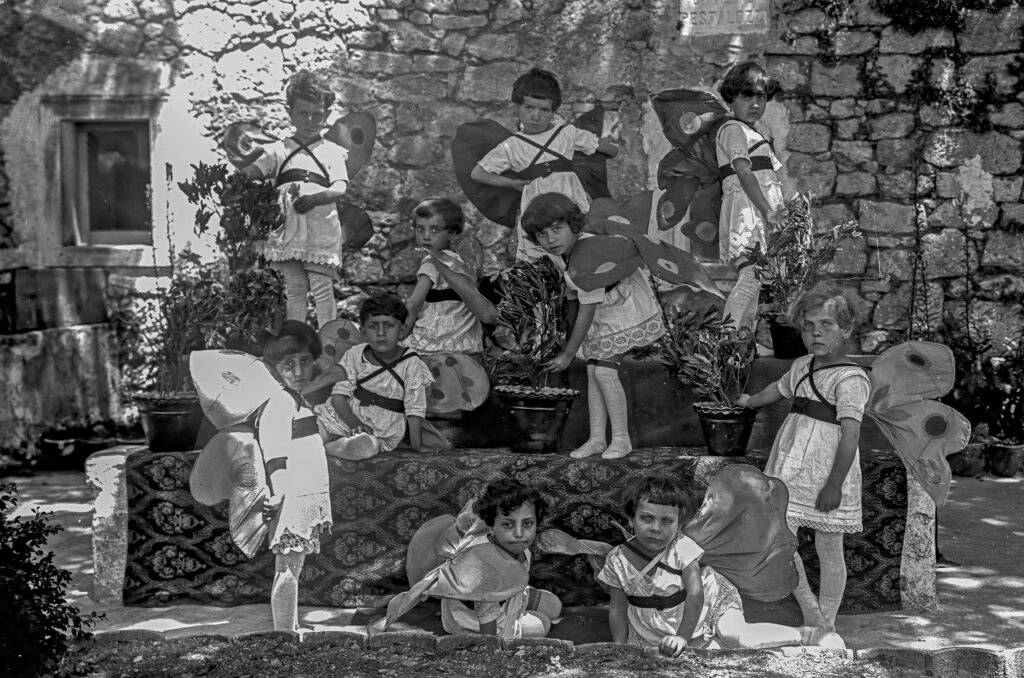
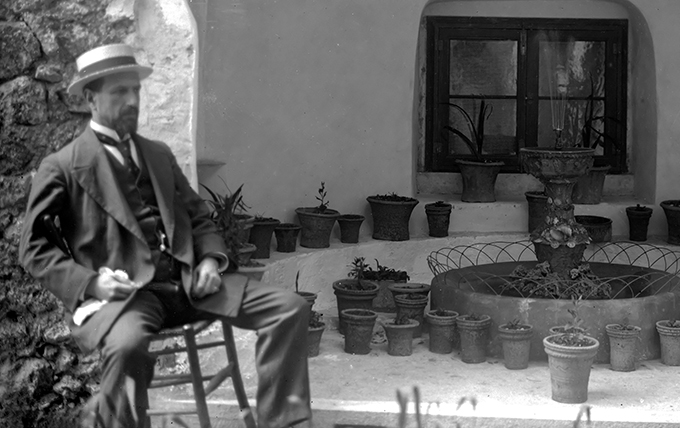
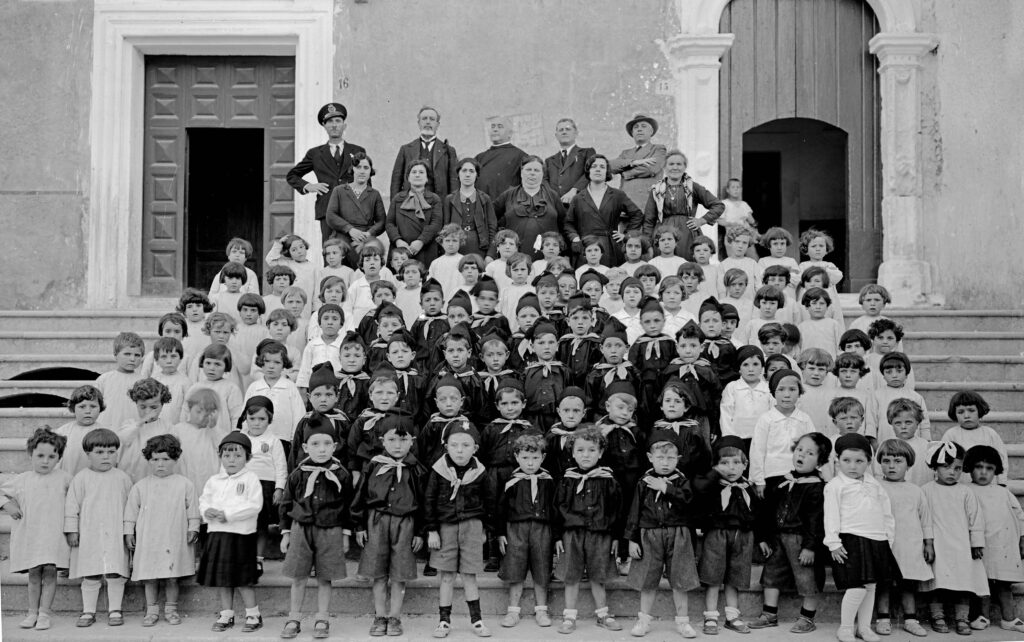
The Origins of the Collection and the National Context. The genesis of the museum is the result of a progressive process. Tancredi began collecting agricultural tools, artisanal artifacts, and everyday objects to support his pedagogical activities, forming an initial exhibition core closely linked to the “Casa dei Bambini,” an educational institution he managed. In 1925, the collection assumed a defined museographic form and, thanks to its organic coherence, was presented in some of the most important national exhibitions dedicated to popular culture: the 2nd International Exhibition of Decorative Arts in Monza (1925), the Festival of Italian Costume (1928), and the Bolzano Exhibition (1930).
Tancredi’s work fit into the fervent climate of development in Italian ethnography, deeply influenced by the scientific legacy of Lamberto Loria, who founded the first Museum of Italian Ethnography in Florence in 1906. Tancredi’s intense linguistic and folkloric research culminated in 1938 with the publication of Folclore garganico, a monumental investigation into the customs, beliefs, songs, and proverbs of the promontory.
The Tancredi Photographic Archive. A piece of inestimable value within the museum’s heritage is the Tancredi Photographic Archive, an extraordinary visual source on Gargano society at the turn of the century. The collection, which comprises approximately seven hundred glass negative plates and films produced between 1893 and 1932, was rediscovered in 1971 during the reorganization of the museum’s materials and was further enriched in 1981 by the discovery of new shots on the premises of the former convent of Saint Francis. For Tancredi, photography was not a mere illustrative whim, but a rigorous tool for social investigation: his images document trades, clothing, Michaelic pilgrimages, and the activities of the “Casa dei Bambini” itself between 1921 and 1947.
The 1983 Refoundation and the Anthropological Approach. A decisive turning point in the institution’s history occurred between the 1970s and 1980s. In 1979, the Municipality identified the monumental complex of the former convent of Saint Francis as the permanent home of the museum, entrusting its technical exhibition design to architect Piero Batini. Inaugurated in 1983, the new museum was not a simple relocation, but a true epistemological refoundation, scientifically curated by Professor Giovanni Battista Bronzini, then director of the Institute of History of Popular Traditions at the University of Bari.
Bronzini’s project superseded the 19th-century conception of the museum as an accumulation of peasant “relics.” The objects were recontextualized to reconstruct the complex networks of relationships between man, economy, labor, and technology. The museum assumed a narrative character, positioning Monte Sant’Angelo as a privileged observation point for understanding the cultural dynamics of the entire Gargano region and the indissoluble ties between material culture, rural labor, and the sacred dimension linked to the pilgrimage of Saint Michael.
From the Museum of Objects to the Contemporary MeTA. From this perspective, the collection has never been considered a static entity, but rather a permanent documentation center for the region. The exhibited object—whether a plow, a traditional costume, or a votive offering (ex voto)—becomes an analytical lens to decode social transformations between the 19th and 20th centuries. In more recent years, this narrative approach has been further enhanced through a museographic restyling that gave rise to the current MeTA (Tancredi Ethnographic Museum). Today’s exhibition itinerary integrates historical objects and images from the Photographic Archive with projections, sounds, and interactive multimedia supports, confirming the institution as a vital cultural infrastructure for the preservation and interpretation of the Gargano’s memory.