
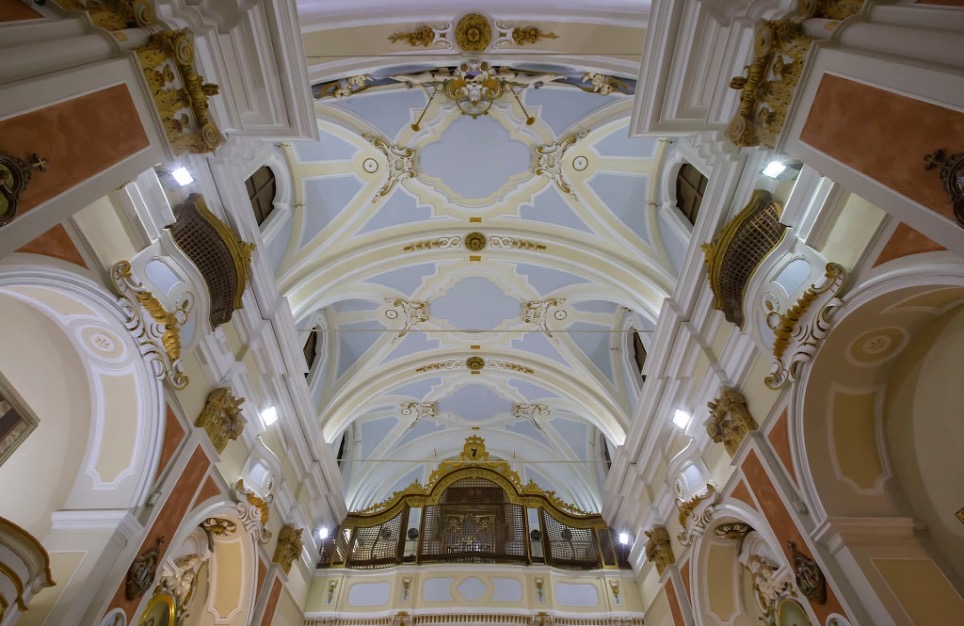
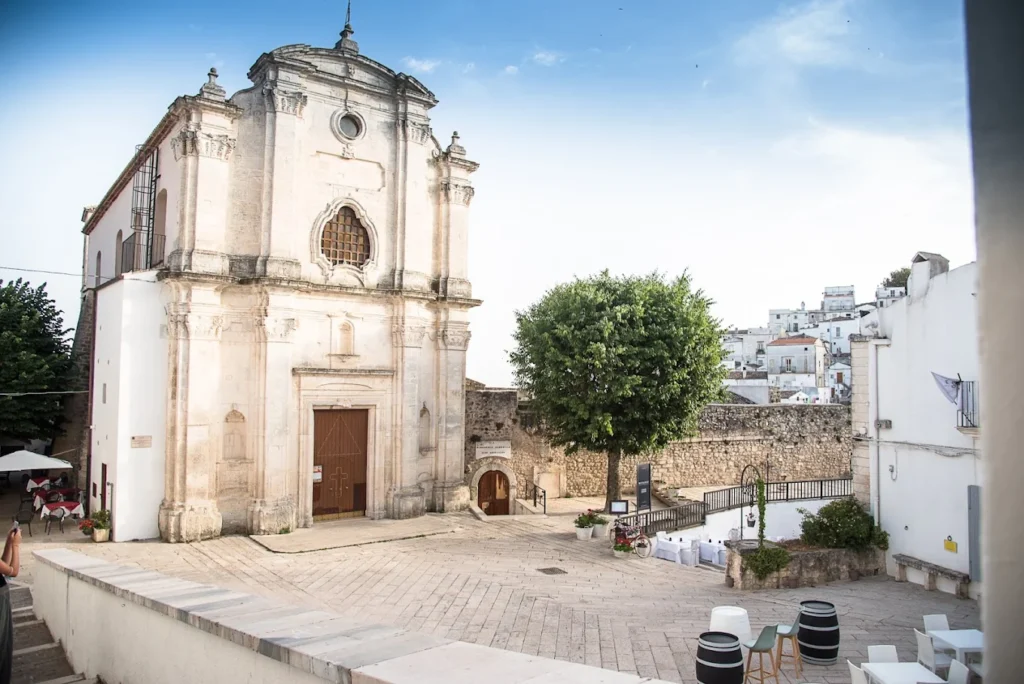
The original structure underwent profound transformations in the 17th century. Starting in 1630, major rebuilding work began, driven also by the need to adapt the spaces to the strict redefinition of papal enclosure imposed by the Council of Trent. The new church, financially supported also by Baron Domitio Gambadoro, was designed to allow access for the faithful from the outside without interfering with the monastic quarters, and was consecrated on August 31, 1675, by the future Pope Benedict XIII. During the 18th century, the complex was further enriched with fine marble altars and the construction of the bell tower, completed in 1770.
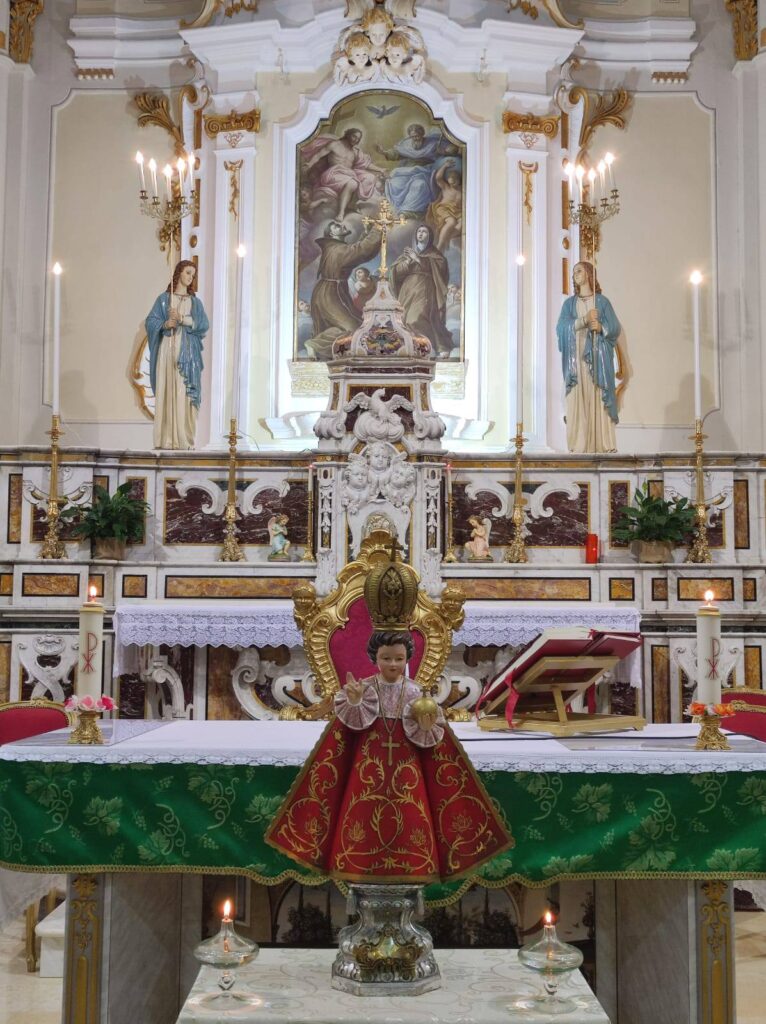
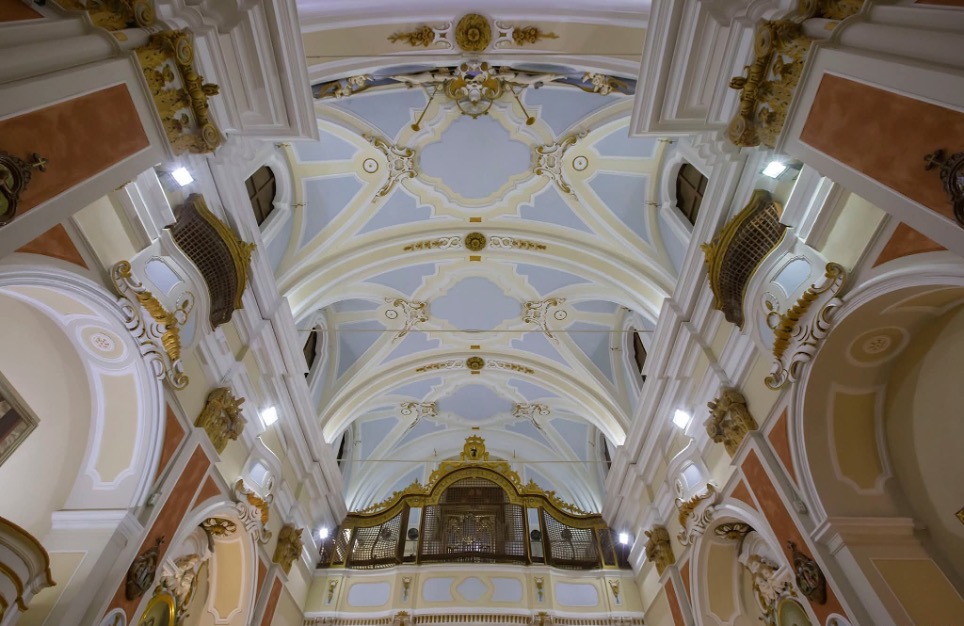
Archaeological Investigations and the Case of the “Abbess.” Of exceptional scientific relevance is the burial crypt located beneath the nave. The excavation and research project launched in 2021 documented a subterranean hypogean space divided into four rooms. Approximately twenty primary burials were identified within the chambers, largely datable between the 17th and 18th centuries: the bodies were laid out on silver fir planks, dressed in monastic habits, and accompanied by devotional objects such as rosaries, small medallions, and crucifixes. Osteological analyses revealed widespread osteoarticular pathologies and, above all, disproved a deep-rooted local belief: the skeleton mounted on a wooden support, traditionally venerated as the remains of the “Abbess,” actually belongs to a male individual.
Suppression and Cultural Rebirth. After more than four centuries of existence, the monastic community was dissolved, and the nuns were dispersed between 1887 and 1888. The complex experienced a long period of abandonment, aggravated by structural damage caused by the earthquakes of the early 1980s. Following major restoration work, in 1995 the former monastery became the seat of the Center for Michaelic and Garganic Studies of the University of Bari, established on the initiative of historian Giorgio Otranto (to whom the research hub is dedicated today). Currently, the facility also houses the “Ciro Angelillis” Municipal Library, serving as a vital center for research and the preservation of local civic memory.
The Tradition of Ostie Chjéne. Associated with the history of the Poor Clares is the creation of ostie chjéne, Monte Sant’Angelo’s most iconic pastry, composed of a filling of toasted almonds, honey, and sugar enclosed between two communion-style wafers. Although legend places its accidental invention in the 17th century precisely within the convent’s kitchens, this narrative belongs exclusively to the heritage of local oral and gastronomic tradition and does not constitute a documentally proven historical fact to this day.