
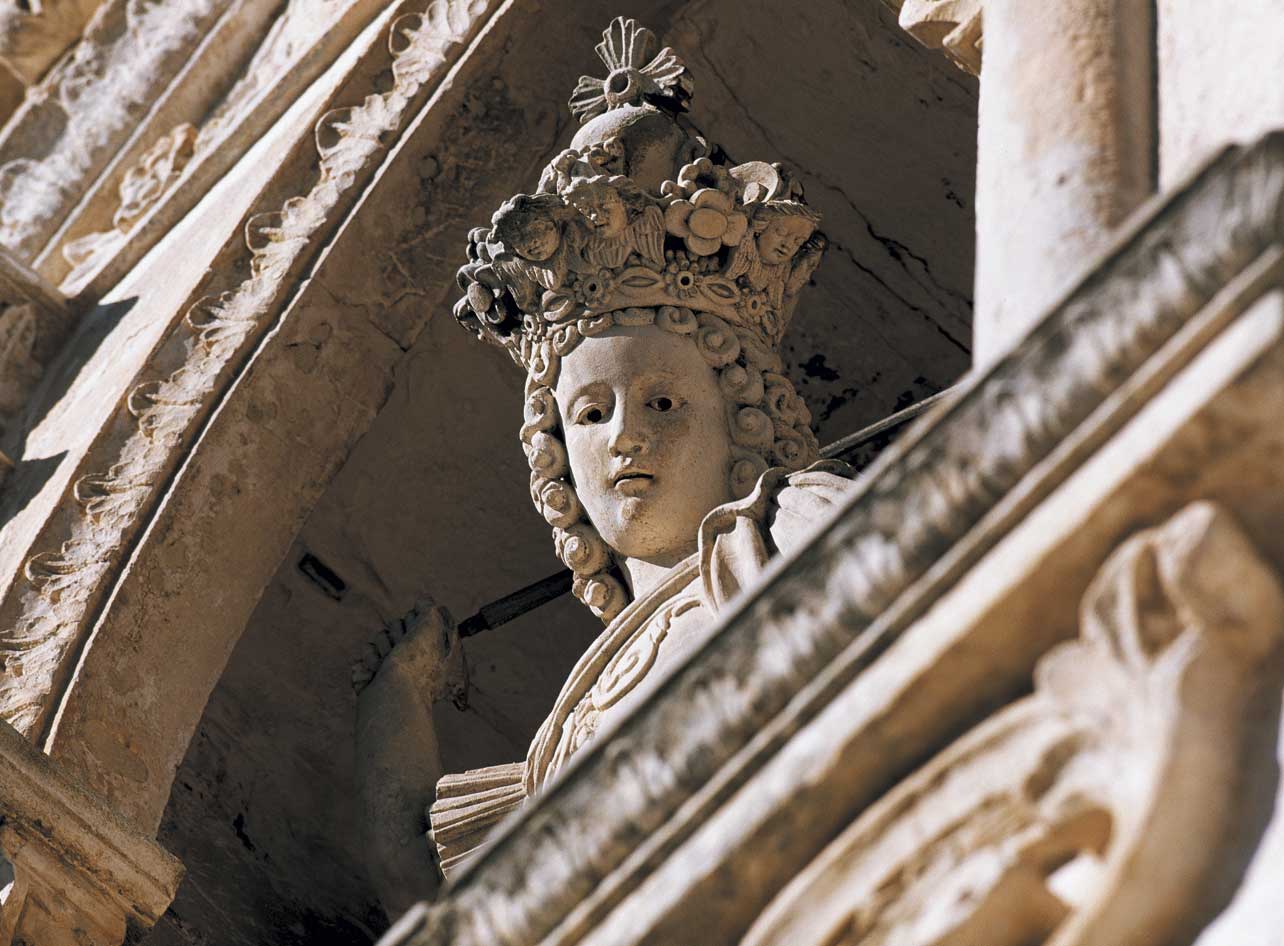
Il Santuario di San Michele Arcangelo, a Monte Sant’Angelo, fa parte dal 25 giugno 2011 del sito seriale UNESCO The Lombards in Italy: Centers of Power (568–774 AD) , which brings together seven of the most significant monumental complexes from the Lombard period. It is the oldest shrine dedicated to the Archangel in Western Europe and, throughout the Middle Ages, was one of the most popular pilgrimage destinations in Christendom.
Origins and Sources. Tradition dates the origins of the cult to the end of the 5th century; archaeological investigations conducted in 2010–2011 by the University of Bari identified evidence in the area in front of the cave that likely dates to the 5th century. The primary source on its origins is the *Liber de apparitione Sancti Michaelis in Monte Gargano* (also known as *Apparitio*, BHL 5948), an anonymous Latin hagiographic text. Its dating is a matter of debate: some scholars recognize an older core text, but the version that has come down to us is commonly dated to the Lombard period, between the second half of the 7th century and the middle of the 8th century; the oldest manuscripts date to the late 8th or early 9th century.
The *Liber* recounts three episodes. In the first, a bull that had escaped from the herd of the wealthy Gargano is found at the mouth of a cave; the arrow shot at the animal rebounds and strikes the one who fired it, and the Archangel reveals to the bishop of Siponto that the place is under his protection. In the second, Michael promises the people of Siponto victory over the Neapolitan “pagans,” achieved amid thunder and storm: scholars recognize in this an echo of the 7th-century clashes between the Lombards of Benevento and the Byzantines for control of the sanctuary. In the third, the Archangel announces that he himself has consecrated the cave, which for this reason will be called the “Celestial Basilica.”
The *Liber* does not specify any dates: the years 490, 492, and 493, as well as the identification of the bishop with Saint Lawrence of Maiorano, derive from later tradition, specifically from the 11th-century *Vita Laurentii *. Local devotion also recalls a fourth apparition, which occurred in 1656 to Archbishop Alfonso Puccinelli during a plague epidemic.
The Name and Figure of the Archangel. The Hebrew name Mikha’el means “Who is like God?” (in Latin, *Quis ut Deus?*). In the Bible, Michael is “one of the chief princes” (Dan 10:13), the “great prince” who protects the people (Dan 12:1), the archangel (Jude 9), and the leader of the angels in the battle against the dragon (Rev 12:7): hence the title princeps militiae caelestis, leader of the heavenly hosts.
The name belongs to a very ancient Semitic onomastic type: personal names with a similar structure, such as Mi-ka-il (“Who is like Il?”), were identified by Giovanni Pettinato as early as in the Ebla texts (24th–23rd centuries B.C.). However, these are personal names, not names of deities, and the direct connections between Ebla and the biblical tradition proposed in the 1970s have been rejected by most scholars.
The Lombards and the Spread of the Cult. The cave became a pilgrimage site as early as the Early Middle Ages, as attested by some two hundred wall inscriptions carved or scratched by visitors, some in runic script. After the merger of the Diocese of Siponto with that of Benevento in the second half of the 7th century, the sanctuary became the national shrine of the Lombards: the dukes of Benevento, and later the kings of Pavia as well, financed its expansion into a monumental complex and helped spread the cult of St. Michael throughout the kingdom.
The Gargano model is explicitly referenced in the founding legend of Mont-Saint-Michel in Normandy: according to the *Revelatio ecclesiae sancti Michaelis*, written in the early 9th century, Bishop Aubert of Avranches sent envoys to the Gargano in 708–709 to obtain relics from there. The Sanctuary of St. Michael in Val di Susa, founded between 983 and 987, belongs to the same type of high-altitude Michaelic shrines; together with the Gargano and Mont-Saint-Michel, it constitutes one of the three major centers of the cult of the Archangel in the West.
Worship, Nature, and Transhumance. The worship of the Archangel is intertwined with elements related to water—such as the “drop” that trickles from the rock in the grotto, which pilgrims considered miraculous—and with the agro-pastoral world. The two main festivals have distinct origins. May 8 commemorates the Apparition, and Lombard historiography linked it to Grimoald’s victory over the Byzantines. September 29, the Feast of the Dedication, is attested as early as the 5th century in Rome for the Basilica of the Archangel on the Via Salaria and was later associated with the Gargano as well.
These dates marked the transhumance season. With the establishment of the Royal Customs Office for Sheep Transhumance (1447), flocks coming down from Abruzzo and Molise could enter the Tavoliere pastures only after September 29 and resume their journey back to the mountains starting May 8: the customs year thus ran from one St. Michael’s Day to the next.
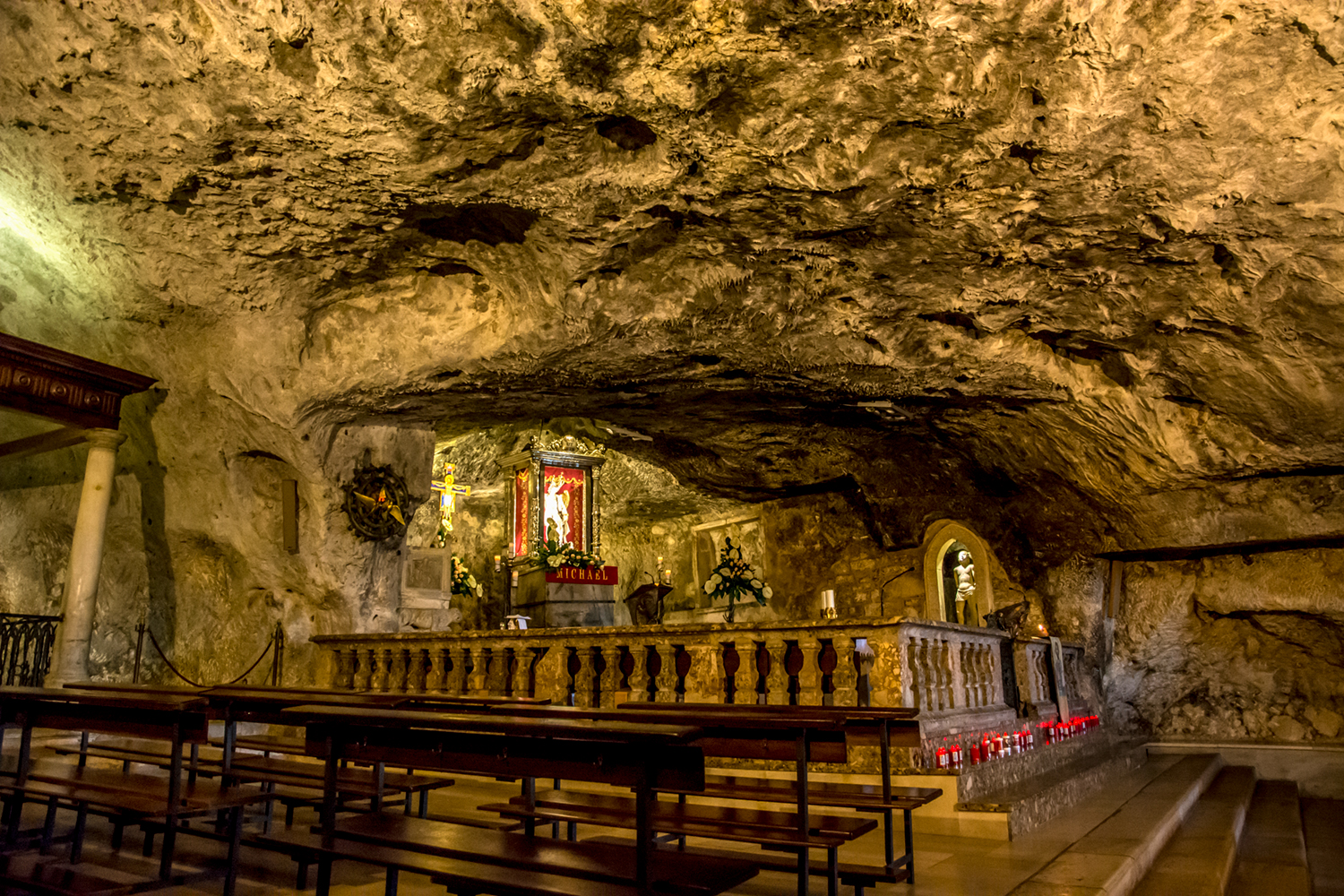
The cave and the early medieval periods. The complex consists of multiple layers: early Christian, Byzantine, Lombard, Romanesque, Gothic, and modern phases have been superimposed upon the natural cave. According to studies, it was originally formed by two cavities of different sizes separated by a rocky partition: a smaller one, where the stone bearing the Archangel’s “footprints” was venerated (the present-day Altar of the Footprints), and a larger, deeper one, the *basylica grandis* mentioned in the *Liber*, where dripping water collected. The grotto was accessed from the north, through the so-called Arch of Saints Peter and Paul.
Between the Byzantine and Lombard periods (6th–8th centuries), a two-nave structure was built—each nave featuring a staircase—along with a porticoed gallery approximately 40 meters long, the *longa porticus* mentioned in the *Liber*, intended to welcome pilgrims and now identified with the gallery that houses the lapidary museum. From the mid-7th to the 8th century, the Lombard dukes undertook further major construction projects: likely during the reign of Romuald I, Duke of Benevento (662–687), a new staircase was built leading to the Altar of the Footprints; later, the rock wall was demolished, creating a single large space, and a second monumental staircase was built at a higher elevation.
From the 11th century to the Angevin period. Between the 11th and 17th centuries, the sanctuary underwent major renovations, which raised the floor level and expanded the grotto, concealing the original layout. The episcopal throne, associated with Bishop Leo, dates to the 11th century, and the famous bronze doors, crafted in Constantinople in 1076 for Pantaleone of Amalfi, a member of the Mauroni family, who also commissioned bronze doors for Amalfi Cathedral and for St. Paul Outside the Walls in Rome.
In 1271, Charles I of Anjou initiated projects to improve the access roads and the facilities for welcoming pilgrims. The Angevin period saw the renovation of the staircase leading to the grotto—along which monumental tombs and 14th-century frescoes are found—as well as the construction of the large three-bay nave with cross vaults, running parallel to the entrance to the grotto. The octagonal bell tower, which resembles the towers of Castel del Monte, is dated by some scholars to 1274 and attributed to Protomagister Giordano and his brother Marando, who are commemorated in an inscription; according to other scholars, the first two levels date back to the time of Frederick II.
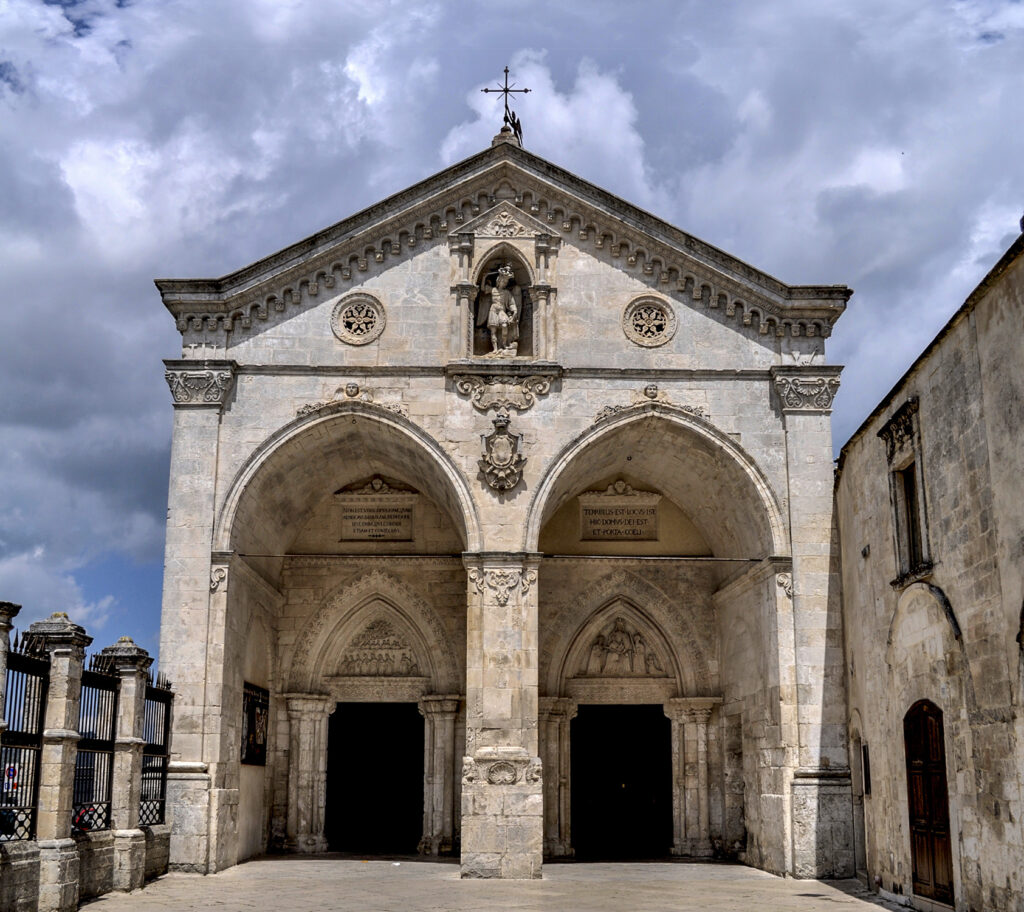
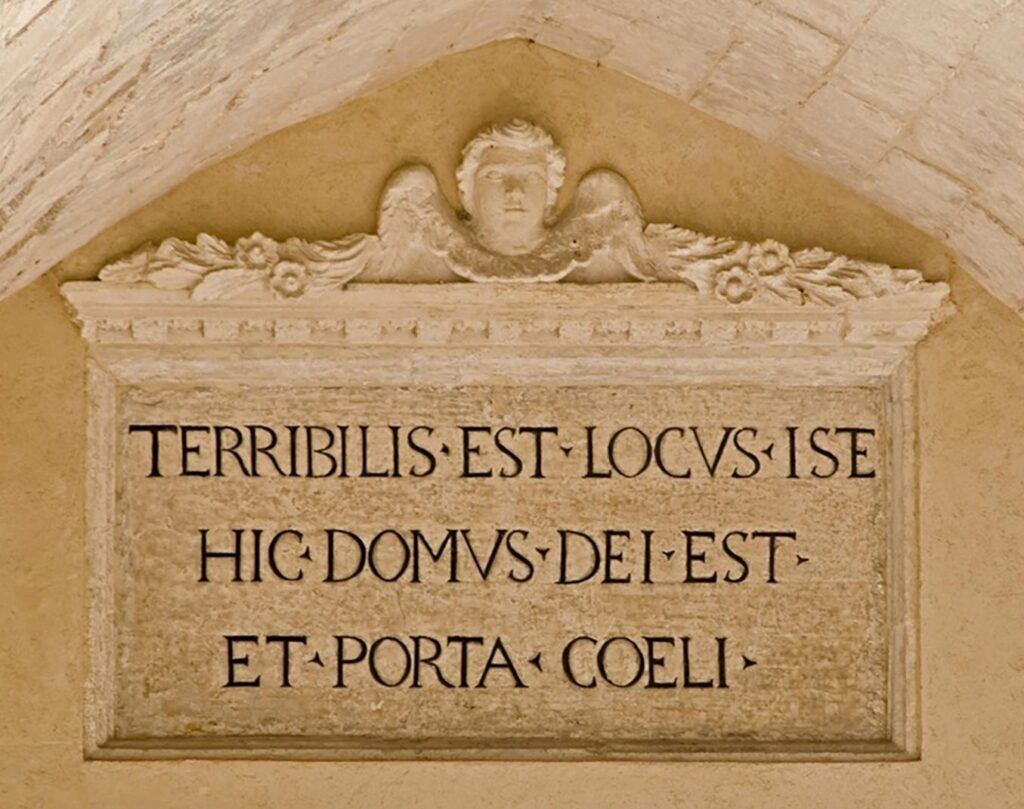
In 1395, the Gothic portal leading to the staircase—now the one on the right side of the façade—was constructed; it bears the signature of Simeone da Monte Sant’Angelo on the lintel. The ogival lunette depicts the Virgin Enthroned with the Child between Saints Peter and Paul, and, kneeling and depicted on a smaller scale, the patron, identified as Queen Margaret of Durazzo, widow of Charles III and mother of King Ladislaus. Among other elements dating to the modern era are the marble statue of the Archangel attributed to Andrea Sansovino (1507) and the entrance façade from 1865.