
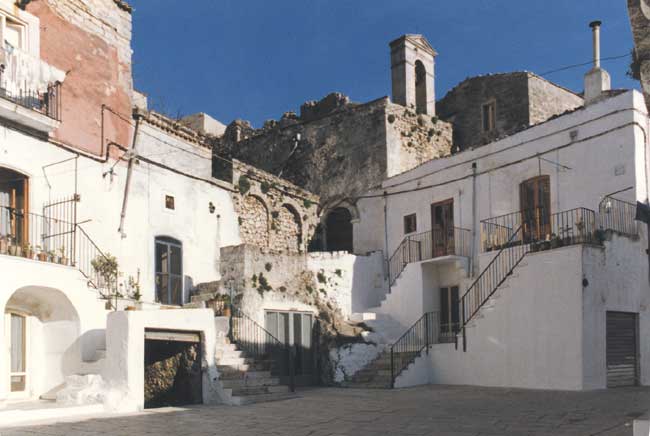
The Church of San Salvatore, located in the heart of the ancient medieval district of Junno, just inside the city walls of Monte Sant’Angelo, is one of the most significant examples of early medieval architecture in the Lombard tradition in Puglia. Scholars date its construction to between the late 8th century and the first half of the 9th century; Marina Falla Castelfranchi, the scholar who first analyzed it, dates it more precisely to the last decades of the 8th century, within the political and cultural context of the Principality of Benevento and the reign of Arechi II, who served as duke from 758 and as prince from 774 to 787. In the absence of written documents, these dates are based on an analysis of the architecture and sculpture.
The Lombard Context and Significance of the Site: Based on its chronology and architectural and decorative features, historians have linked the building to the Lombard political and cultural sphere, which, between the 8th and 9th centuries, assigned Monte Sant’Angelo a strategic role within the territorial and religious system of Langobardia Minor: the town belonged to the Diocese of Siponto, which was united with that of Benevento, and served as the seat of a gastaldato, one of the administrative districts of the Lombard administration. Its proximity to the shrine of St. Michael—the national shrine of the Lombards and one of the principal pilgrimage centers of the Christian West—also conferred particular symbolic and political significance on the area.
The Hypothesis of the Palatine Church In this context, San Salvatore has been interpreted as a possible palatine church. The building stands near the city walls, on a level higher than the street, at a point that controlled the main access road to the mountain. These elements have led scholars to hypothesize the presence of a high-ranking residence in the immediate vicinity, perhaps that of a comes, a Lombard official; according to another interpretation, it would have been a royal foundation, established directly by the princely authority. Support for this hypothesis has also been drawn from the dedication to the Savior—a common feature in Lombard palatine churches—and the architectural similarities to the Benevento style. However, this remains an interpretive hypothesis, not a definitively documented archaeological fact.
The Two-Dome Floor Plan The building features a single-nave floor plan divided into two bays, each covered by a dome of equal height, and culminates in a single semi-circular apse. This design makes it one of the oldest and most significant examples in Apulia of the type of churches with axially aligned domes, a style that would become widespread in medieval Apulian architecture. The floor plan has been linked to the Church of Sant’Ilario in Port’Aurea, Benevento, to which San Salvatore is also compared due to its construction technique using irregular stone blocks: a connection that highlights the cultural and architectural ties between the Gargano region and the Benevento area.
Early Medieval Sculpture: Two carved corbels, decorated with a four-leaf clover motif and a central button, are of particular note. These elements show specific parallels with the sculptural tradition of northern Lombard Italy—particularly that of Milan—and with Visigothic sculpture. According to Falla Castelfranchi, they are part of Arechi II’s political strategy: after the fall of the Lombard kingdom at the hands of the Franks (774), the prince welcomed refugees from the north to southern Italy, assumed the title of princeps, and presented himself as the continuator of the royal tradition, consciously drawing on models from Langobardia Maior. The decoration of San Salvatore thus reveals a convergence between references from the Benevento area and elements attributable to the sculptural tradition of northern Italy.
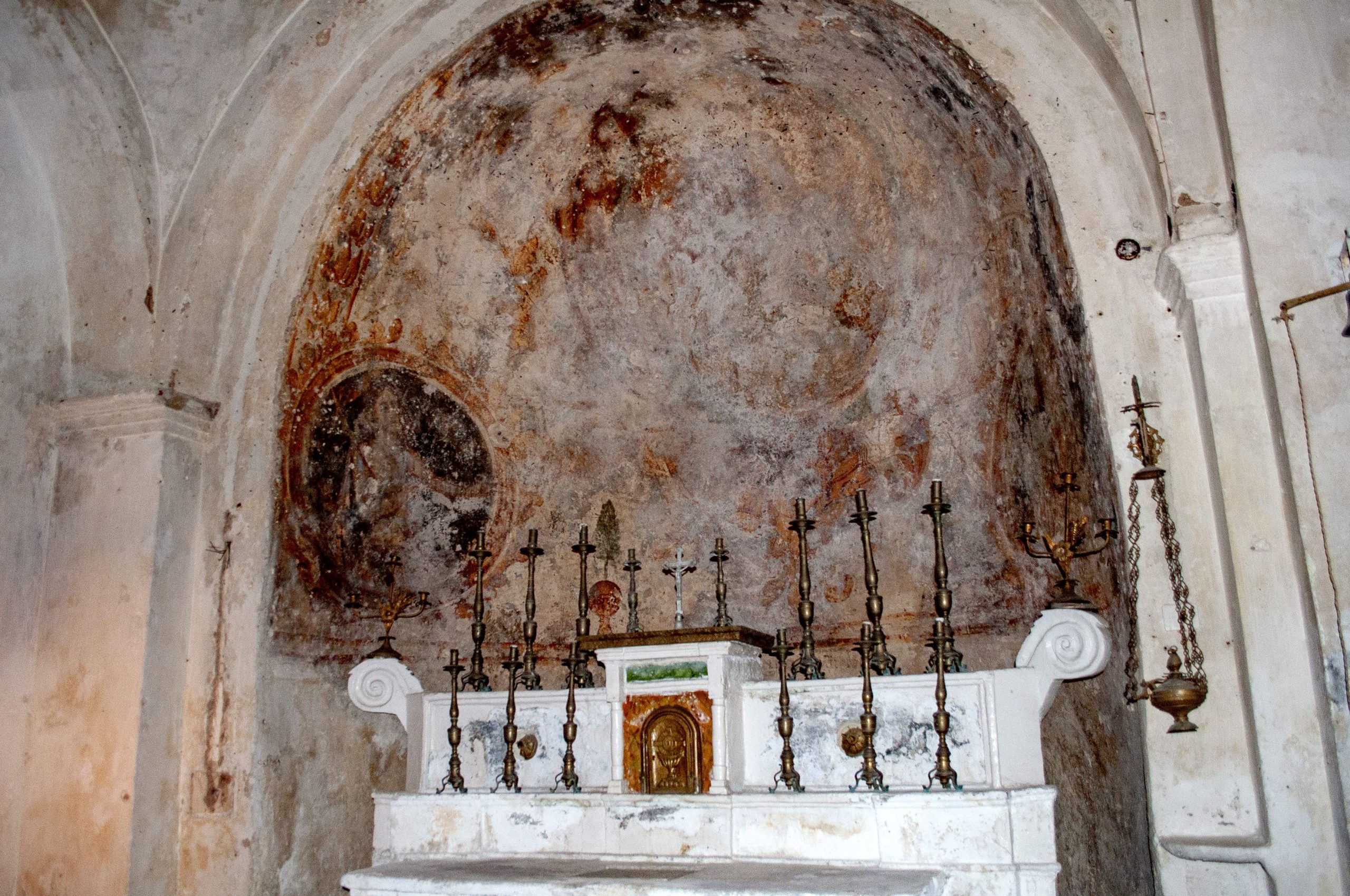
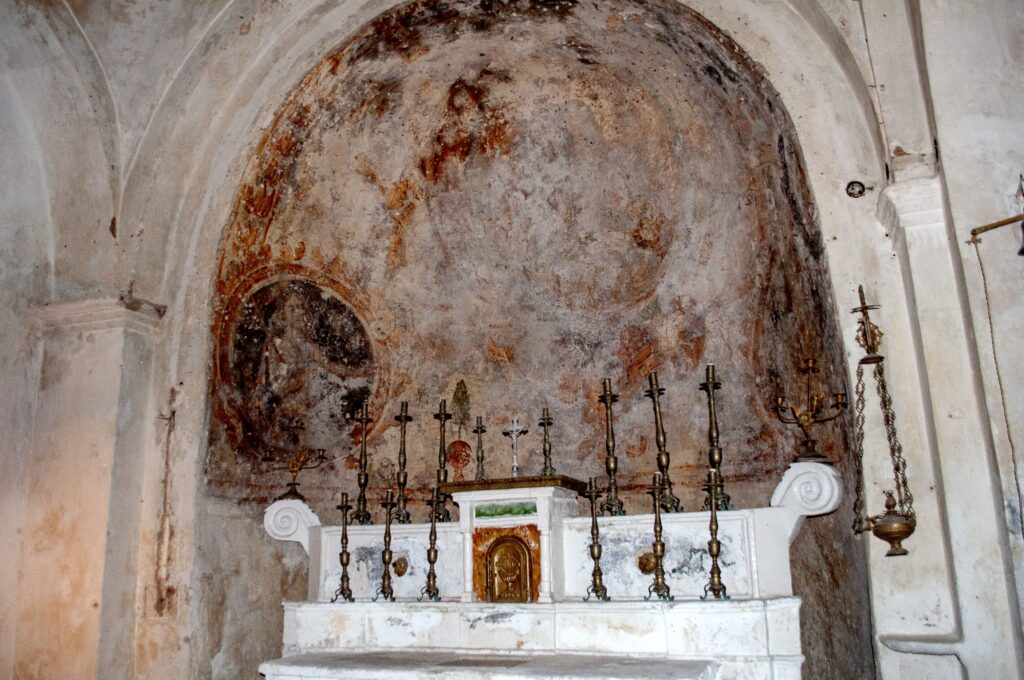
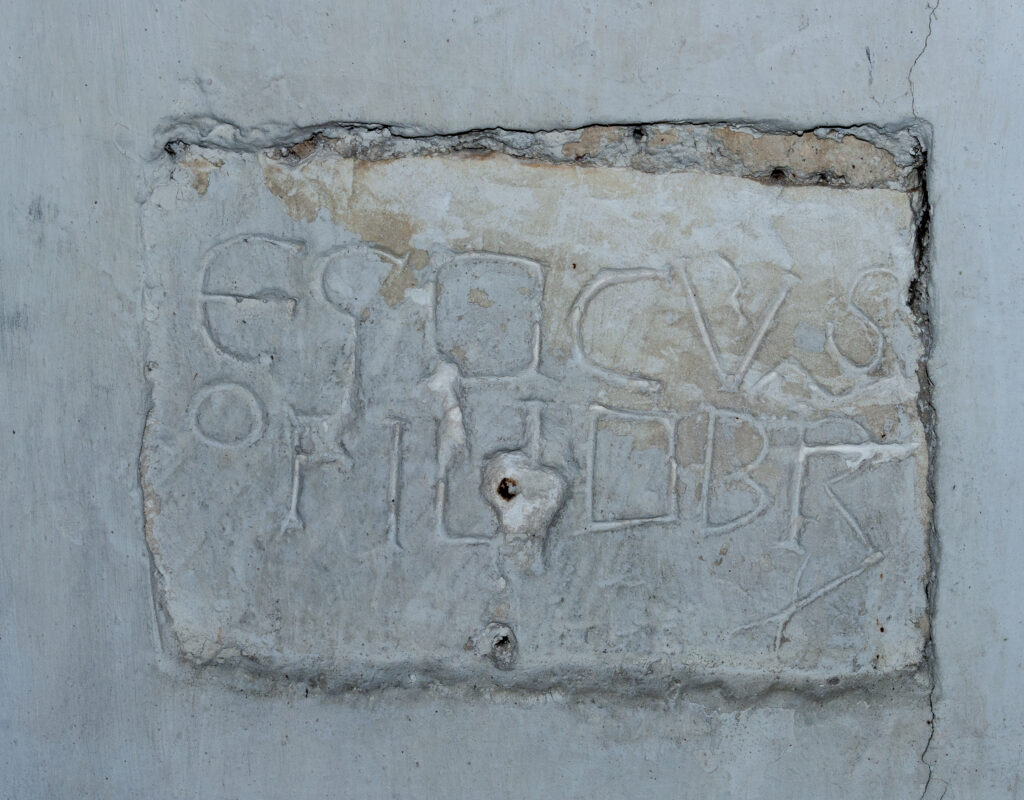
Paintings and Inscriptions Inside the church, remnants of painted decoration have been preserved, including a fresco depicting Christ Pantocrator in the apse. The epigraphic heritage is another point of interest: in addition to the inscriptions used by scholars to date the building, the church preserves inscriptions and graffiti dating to the 12th and 13th centuries, which document the continuity of worship and the long historical stratification of this sacred space.
San Salvatore in the Sacred Landscape of Monte Sant’Angelo The presence of these historical traces takes on particular significance when considered within the broader context of Monte Sant’Angelo, a center where the cult of St. Michael, pilgrimage, and the Lombard presence gave rise to a complex interweaving of religious, political, and settlement functions during the Early Middle Ages. In this sense, San Salvatore serves as an important record of the transformation of the urban and sacred landscape of the Gargano region during the Lombard period.
Rediscovery, Research, and Promotion The building has been the subject of scholarly study only in relatively recent years: Marina Falla Castelfranchi published it as an “unpublished” church and provided its historical context in a series of articles that appeared between 1979 and 1988. Since 2012, the church has also been nominated several times for the FAI’s national “I Luoghi del Cuore” registry, contributing to the understanding and promotion of the monument.
A Testament to the Early Middle Ages in Apulia Today, the Church of San Salvatore stands as a particularly significant testament to the early medieval heritage of Monte Sant’Angelo and Apulia. Its value lies not only in the antiquity of the structure, but in its ability to document—through architecture, sculpture, painting, and epigraphy—the complex interplay between Lombard culture, the Beneventan tradition, Northern Italian models, and the cult of St. Michael. San Salvatore should therefore be viewed not only as one of the earliest examples in Apulia of a church with axially aligned domes, but also as an important record of the development of early medieval Apulian architecture and the relationship between power, sacred space, and territory in the Gargano region between the 8th and 9th centuries.